
weekly digest(s) #9 + 10
february 23 - march 8, 2026: the left hand of darkness, childhood's end, nothing's about to happen to me, downton abbey

February has melted into March and everything is mud.
I’ve spent this past week immersed in the bureaucratic wonderland that is applying for disability, a process I started last May.1 I didn’t post a digest for the week before, as all my mental energy was used up going through my medical records and meeting with a doctor who hadn’t read those records in order to tell her what she could have learned from said records, so this will be a double issue covering both weeks.
reading
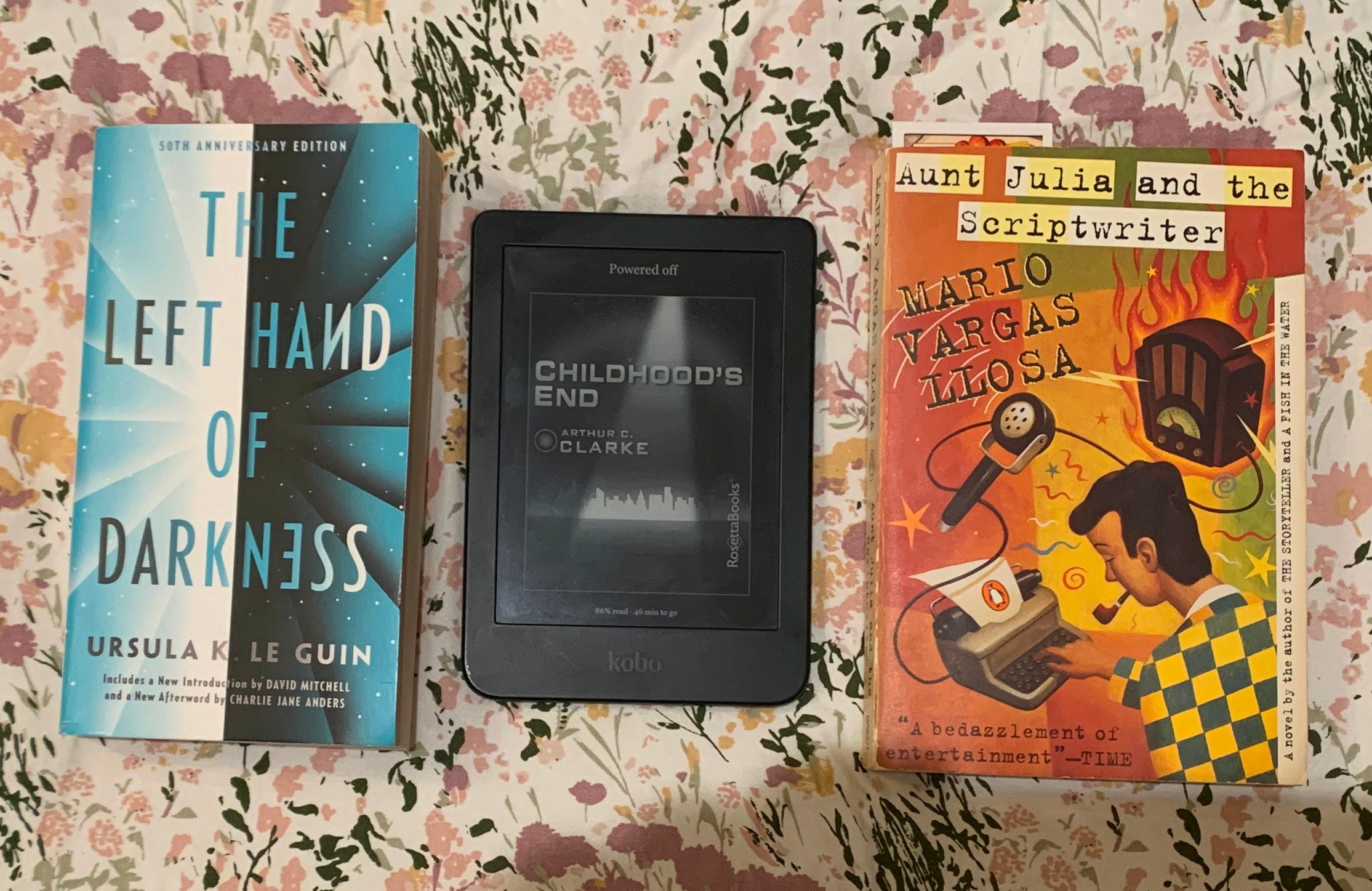
I finished rereading The Left Hand of Darkness by Ursula K. Le Guin. This was the first Le Guin book I read, two years ago. I’ve since read 15 others, and I think this is her masterpiece. It follows Genly Ai, a representative of the intergalactic Ekumen, as he makes first contact with the planet Gethen. Gethen’s culture has been shaped by two elements: its brutal, freezing climate (the aliens have nicknamed the planet Winter) and the fact that most of its people have no gender. Interestingly, the lack of gender highlights Genly’s misogyny – he sees everyone around him as a man, and is repulsed by traits or behaviors he considers feminine. But more than anything else, he is consumed by the strangeness of being the lone alien on a previously isolated planet. The miscommunication between him and the other characters is so deep, so fundamental, that is almost beyond their understanding. They are able to speak the same languages, but their societal differences are difficult to bridge. Gethen is a planet where skirmishes have been fought but no one has ever gone to war; the airplane was never invented because, on a planet without birds or flying insects, none of the languages even have a word for flight; people are deeply driven by a code of honor known as shifgrethor that Genly never fully comprehends; it is so cold that they keep small hammers on the table at meals in order to break the ice that forms over top of their drinking glasses. Le Guin is an expert world builder, writing a story rich with detail but not weighed down by exposition; she expects the reader to keep up. It’s a beautifully written, incredibly complex and thoughtful novel.
I then read Childhood’s End by Arthur C. Clarke on Vincent’s recommendation. An alien race takes over Earth, assuming total control but only implementing (as far as anyone can tell) positive changes. They cause world peace, the end of hunger and discrimination, and bring incredible advances in technology, though at the cost of human freedom and, eventually, creativity and culture. Taking place over the course of several generations, Clarke traces the changes in humanity as they’re guided to “enlightenment” by the Overlords. It’s a strange book – originally published in 1953, it feels very of its time in a way that The Left Hand of Darkness, published only 16 years later, generally doesn’t, though perhaps that’s largely because Childhood’s End is set on a futuristic Earth, and is therefore in direct conversation with Earth’s present. At one point a character ruminates on how dramatically society has changed after the invention of the birth control pill and the paternity test, and I was surprised to remember that Clarke wrote his novel before either of these were a reality. Clarke explores interesting ideas but sometimes runs into the limits of his own beliefs – he compares the alien Overlords “bringing peace” to Earth to the English Raj in India2, and while in his utopia racism is described as a thing of the past, women seem to be nothing more than mentally vacant homemakers. Clarke’s prose is mediocre, but I do think the thematic exploration is worth reading. And the ending is...surprising to say the least.
The stacks of unread books on my floor are starting to get to me, so I felt like it was time to make some progress on my physical TBR next. I started Aunt Julia and the Scriptwriter by Mario Vargas Llosa, translated by Helen R. Lane. When I brought this home the other week, my dad said he read it a decade ago and it was one of his favorite books of all time. I’ve been making slow progress, but I’m liking it so far.
watching
My mom and I finally got caught up on The Gilded Age. Before I deleted instagram, I asked on my story if the writing improves and my friend Aly said “no but season 3 is 🔥”. We’ve been quoting this whenever anything insane happens, which means we said “season three is fire” several times an episode. And it is – the plot has finally become so melodramatic and fun that the quality of the dialogue doesn’t matter.
We’re now watching Downton Abbey, which neither of us saw when it was airing. Watching its predecessor helps me understand why my expectations for The Gilded Age were so off. I had thought that Downton Abbey was a Serious Drama, and while it certainly seems to be taking itself seriously, it is in fact wonderfully over the top and soapy. It’s a better show than The Gilded Age – I think its narrower scope3 does a lot to help it – but I will say that its pacing is bizarre. Several episodes into the first season we discover that two years have already passed, via a title card and some very natural dialogue. (“I have been working here for two years!”) Without this, I would have thought that it had been only weeks, maybe months. It’s an odd choice to move through time so quickly when several of the main characters are young women who would have been facing pressure to marry before they got too old – each year should make a significant difference to them, but this time pressure is never really felt.
listening to
Since Mitski’s new album Nothing’s About to Happen to Me came out I haven’t really listened to anything else. It’s a beautiful album, at turns wistful and desperate, always achingly lonely. Since I first heard her music, I’ve thought that Mitski is one of our most compelling, consistently skillful contemporary lyricists, and this album is no exception.
eating & drinking
For dinner these past two weeks my parents made baked ziti, salmon roll bowls, teriyaki tofu and veggies, chicken and sweet potato burrito bowls, vegetarian tortilla soup, street corn beef and sweet potato bowls, noodle okonomiyaki, black bean and plantain chili, lentil sloppy joes, tofu and broccoli with sesame peanut pesto, street cart style chicken and rice, and pork tenderloin agridolce with squash rings.
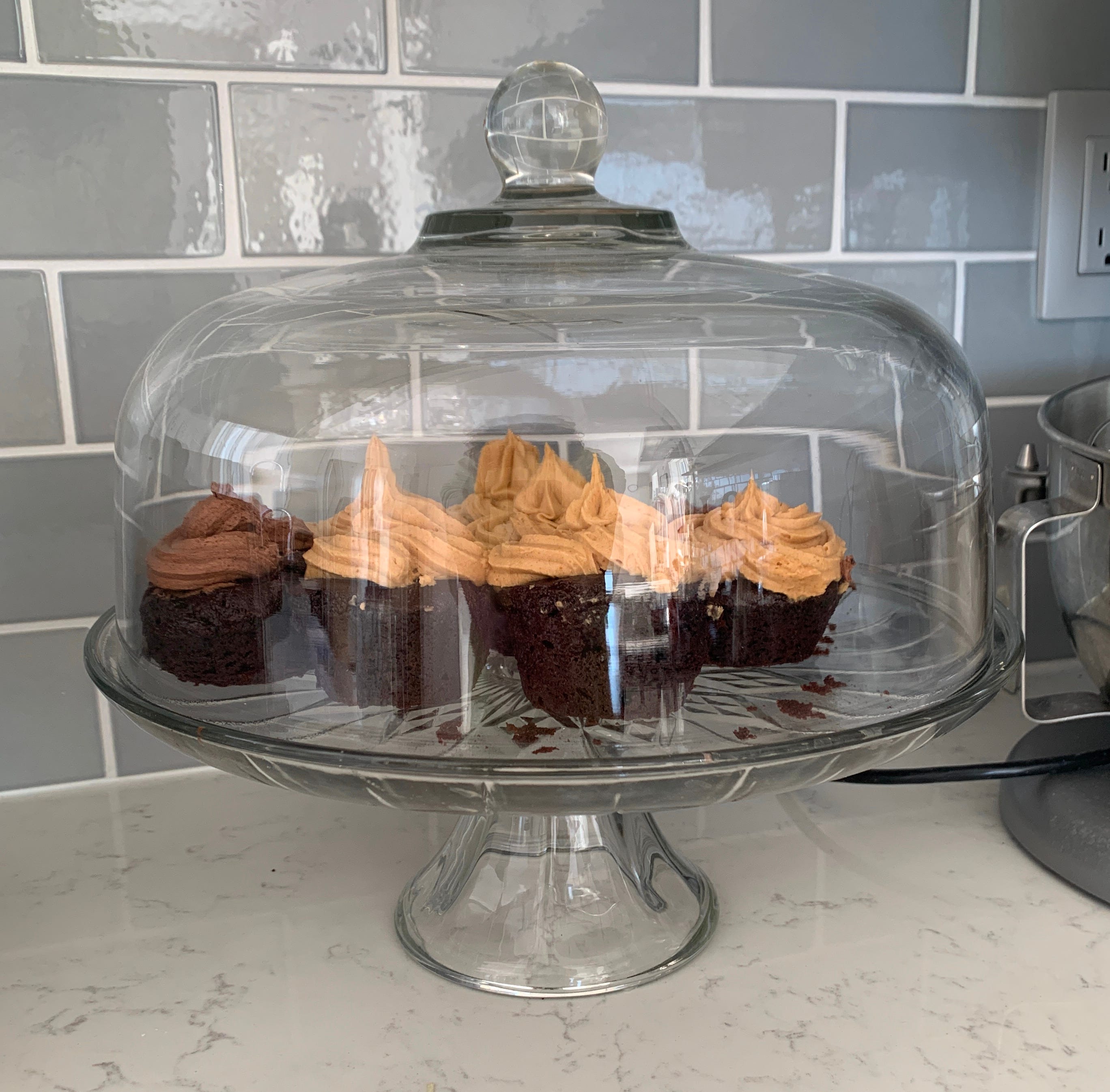
My mom made chocolate cupcakes with peanut butter frosting which were incredible. She adapted a recipe from Sally’s Baking Addiction to be gluten free, though you’d never know it.
I’m also trying a new electrolyte drink in my endless quest to get more sodium. The gatorlyte that I’ve been drinking has only 420 mgs of sodium, while the new SALTT powders I’m trying have 969 mgs. I got a multi flavor pack to see which ones are worth buying in bulk and so far have tried Cherry Chill4 (disgusting), Lemon Lime Twist (not bad), and Mondo Melon (awful). I’m looking forward to the Blue Slushie flavor, which should be interesting even if it’s gross, and dreading the Booyah Berry which I can’t imagine being good at all.
making
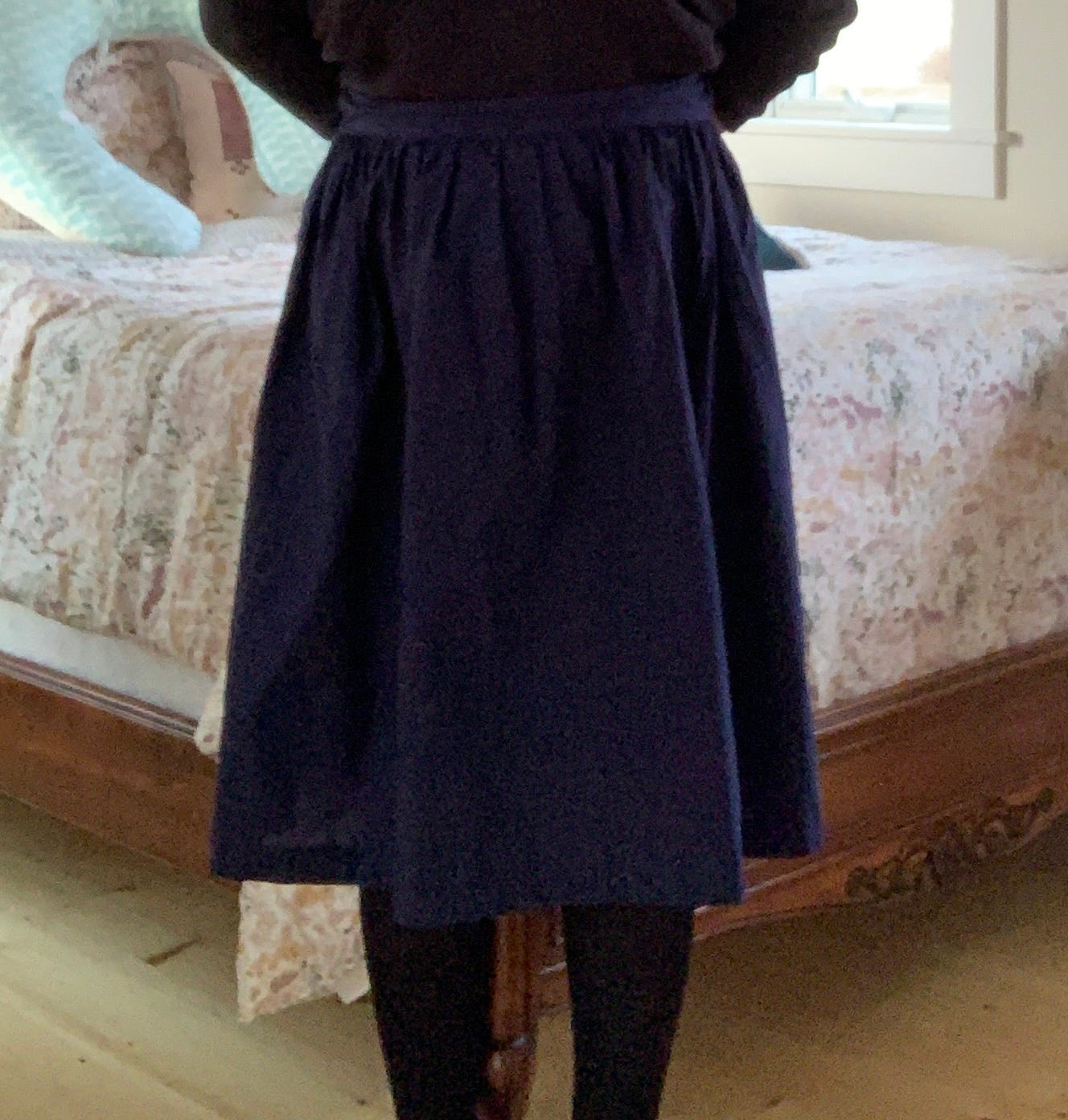
I finished sewing my skirt! I followed this tutorial for a flat front, half-elasticated gathered skirt, though mine was entirely hand sewn. (With a sewing machine, you could probably make one in a day.) I learned a lot doing this – it was my first time gathering, using fusible interfacing, doing mock french seams, encasing elastic, and sewing a blind hem. A lot of my work is very neat, though there are a few sections that are kind of a disaster upon close inspection. When I’m wearing it, though, it just looks like a normal skirt, and I’m very pleased with it. Besides, fast fashion has gotten us so used to looking at terribly made clothing that I don’t think most people will notice any mistakes.
shopping
To be honest, I am not making good progress looking for a rug.
kitsch corner
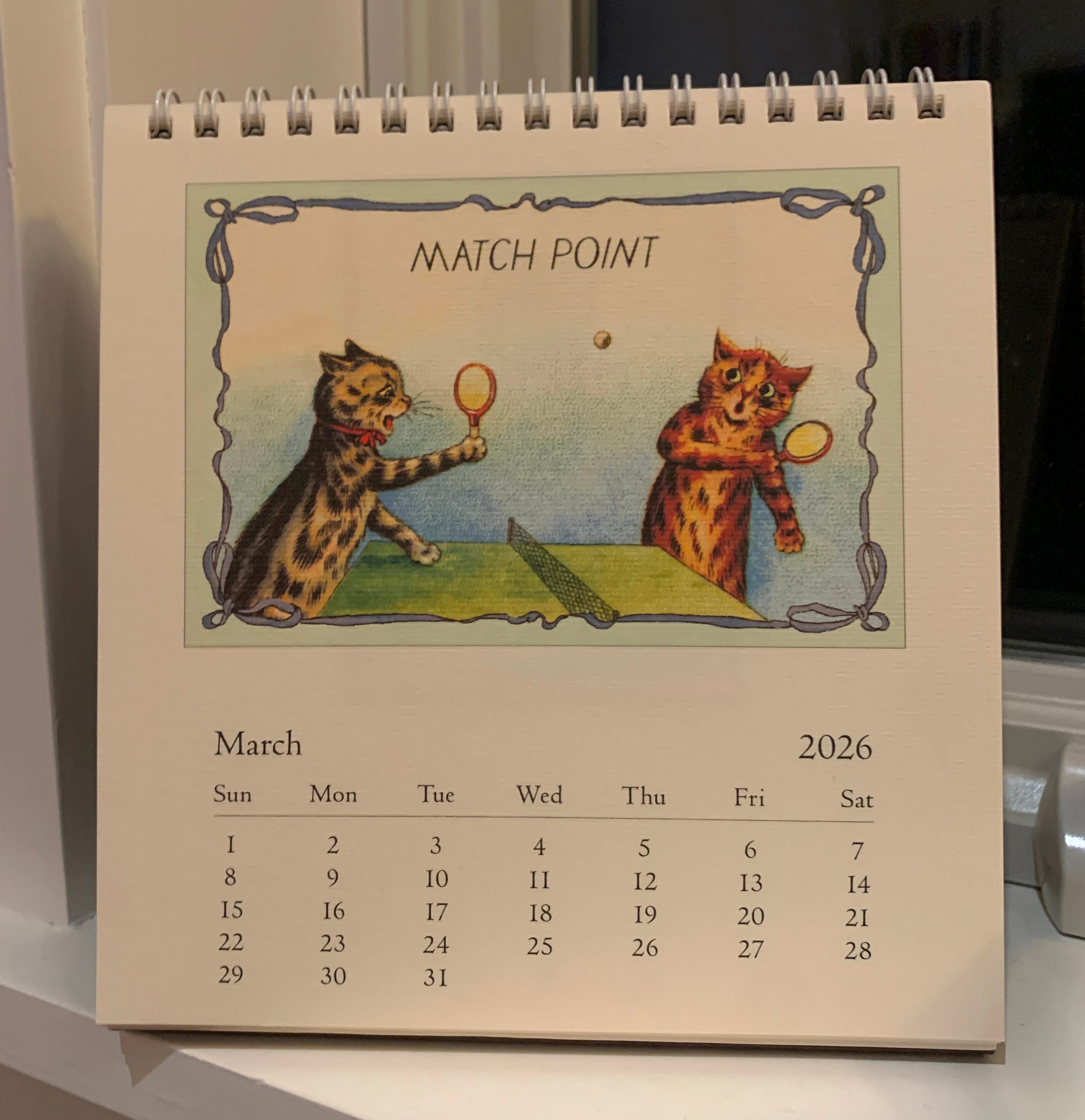
I love the March page of my vintage cats calendar. Now that’s March Madness!
See you next week.
xoxo,
Franny 💋👽
dare i say kafkaesque?
“The objections and policies of these [anti-Overlord] groups varied enormously: some took the religious viewpoint, while others were merely expressing a sense of inferiority. They felt, with good reason, much as a cultured Indian of the nineteenth century must have done as he contemplated the British Raj. The invaders had brought peace and prosperity to Earth—but who knew what the cost might be? History was not reassuring; even the most peaceable of contacts between races at very different cultural levels had often resulted in the obliteration of the more backward society. Nations, as well as individuals, could lose their spirit when confronted by a challenge which they could not meet.”
Downton Abbey follows one household in a small village in the English countryside, while The Gilded Age follows two households and a slew of other characters as it tries to tackle multiple elements of New York society.
Yeah, all the flavors have ridiculous names.